THE POLISH 19TH CENTURY RE-INTERPRETED
Concert Program
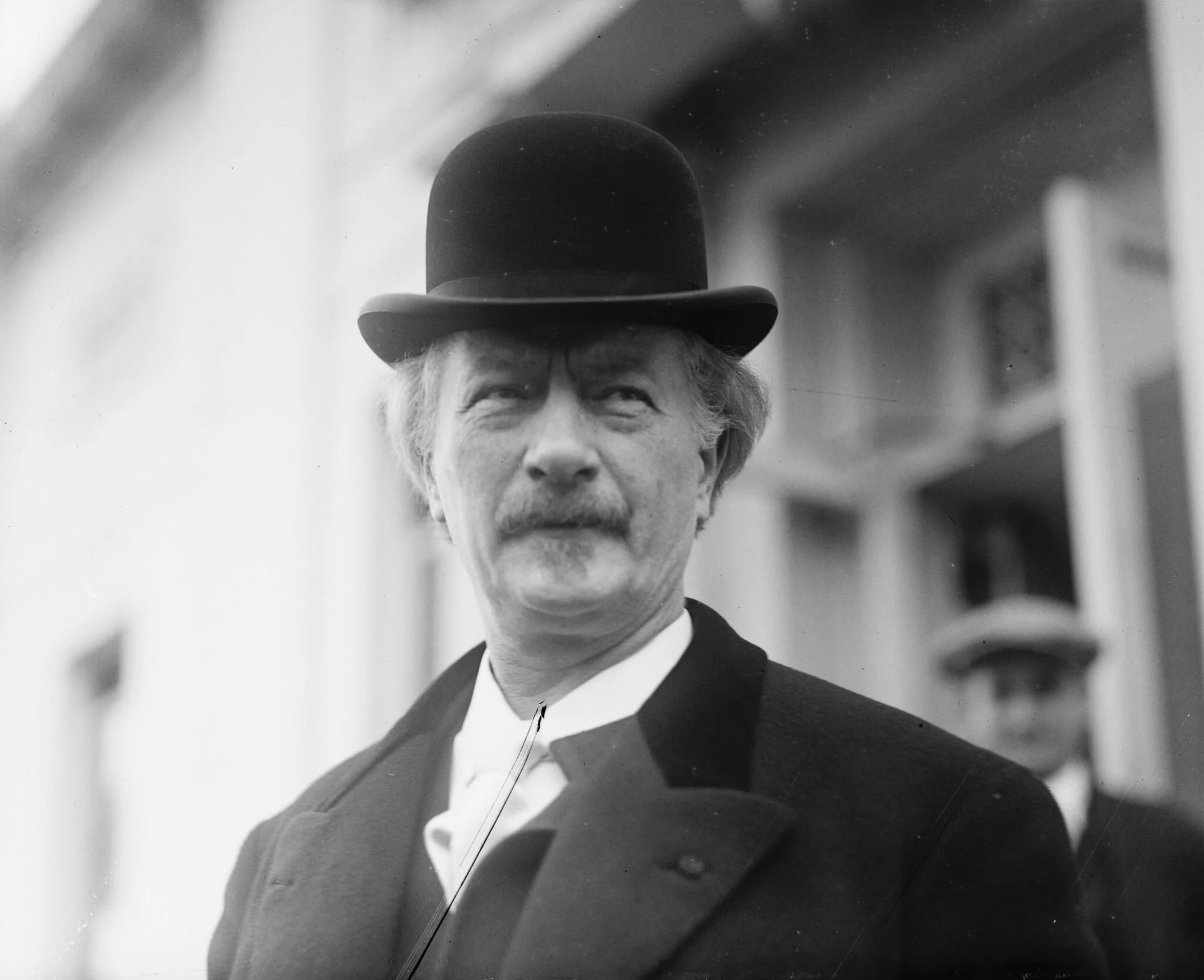
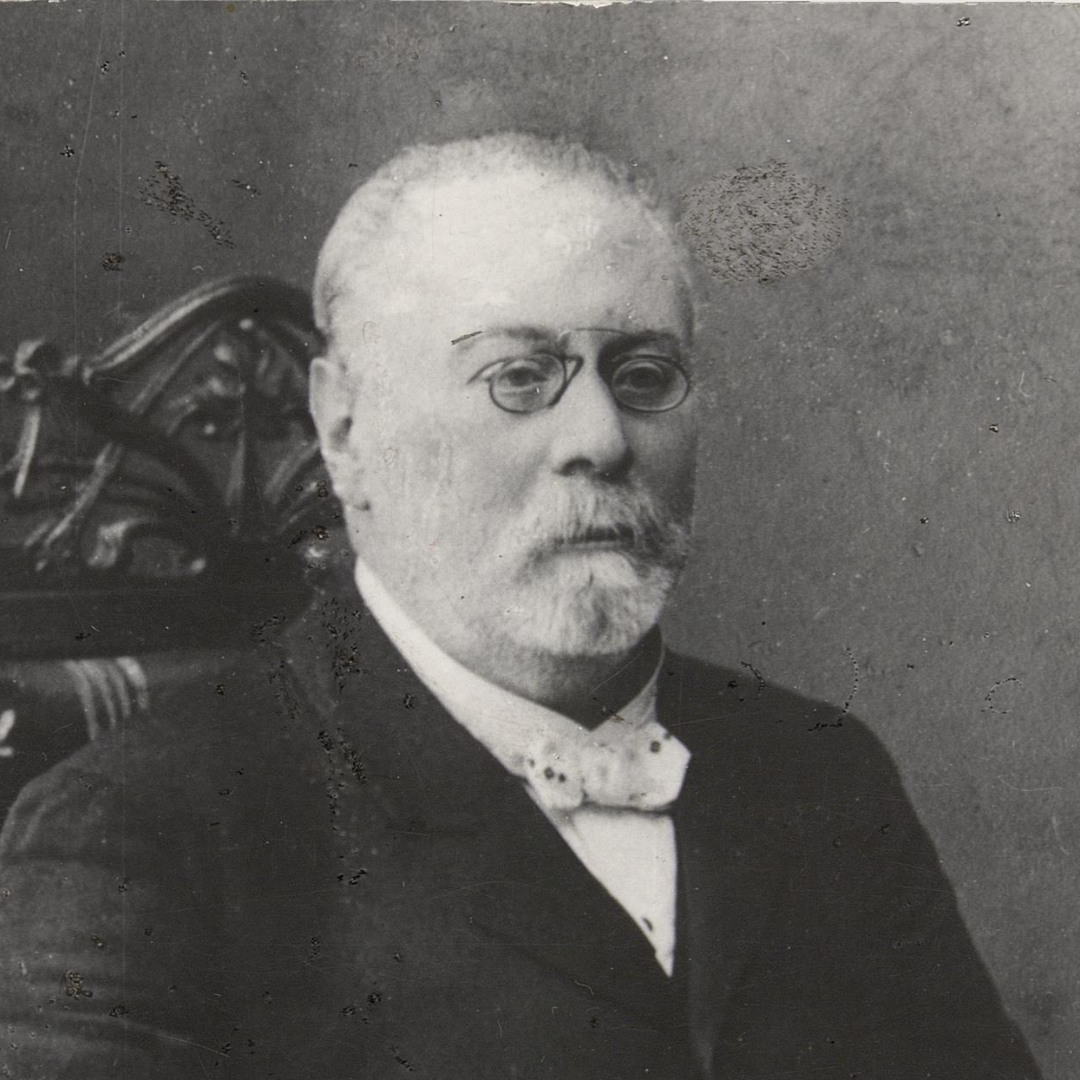
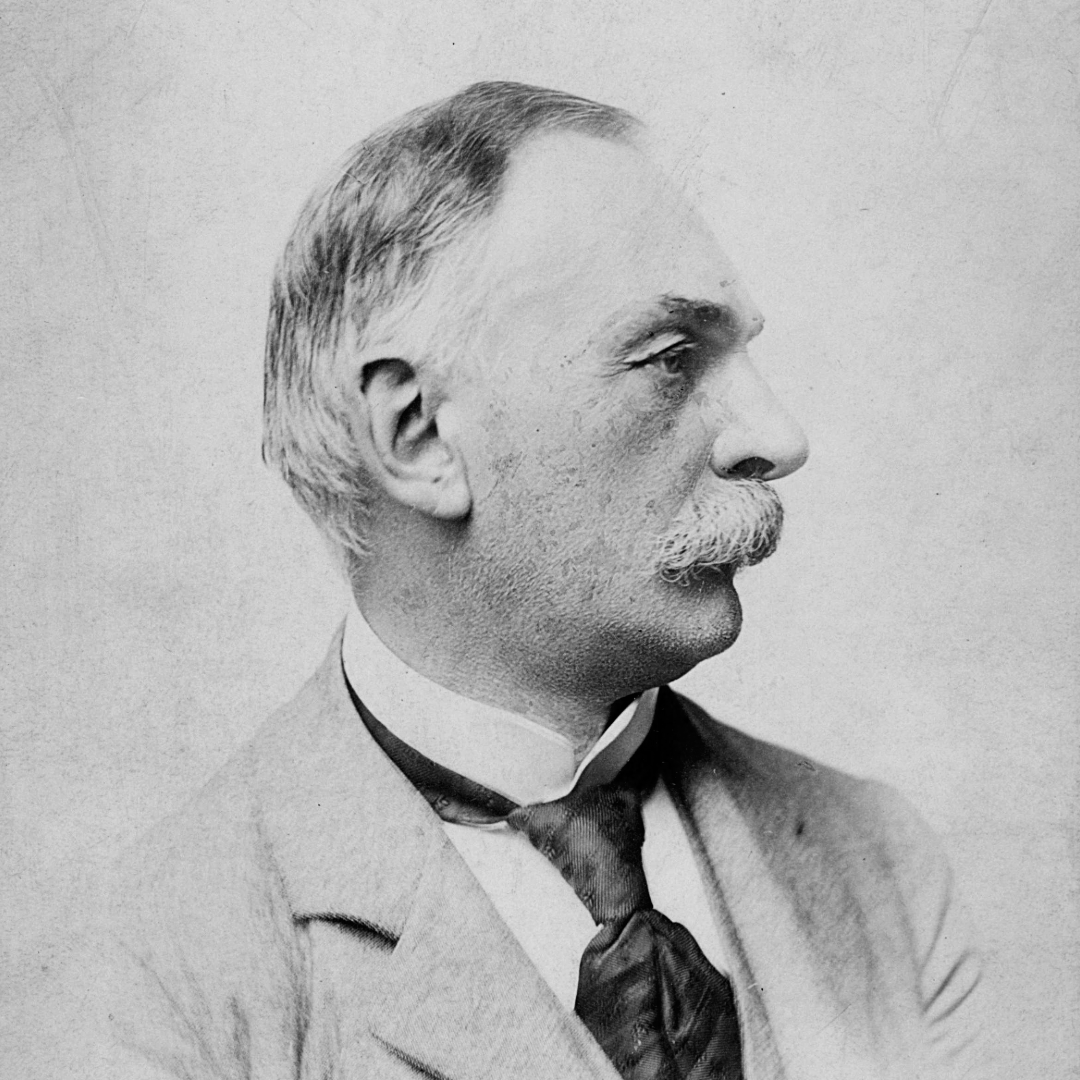
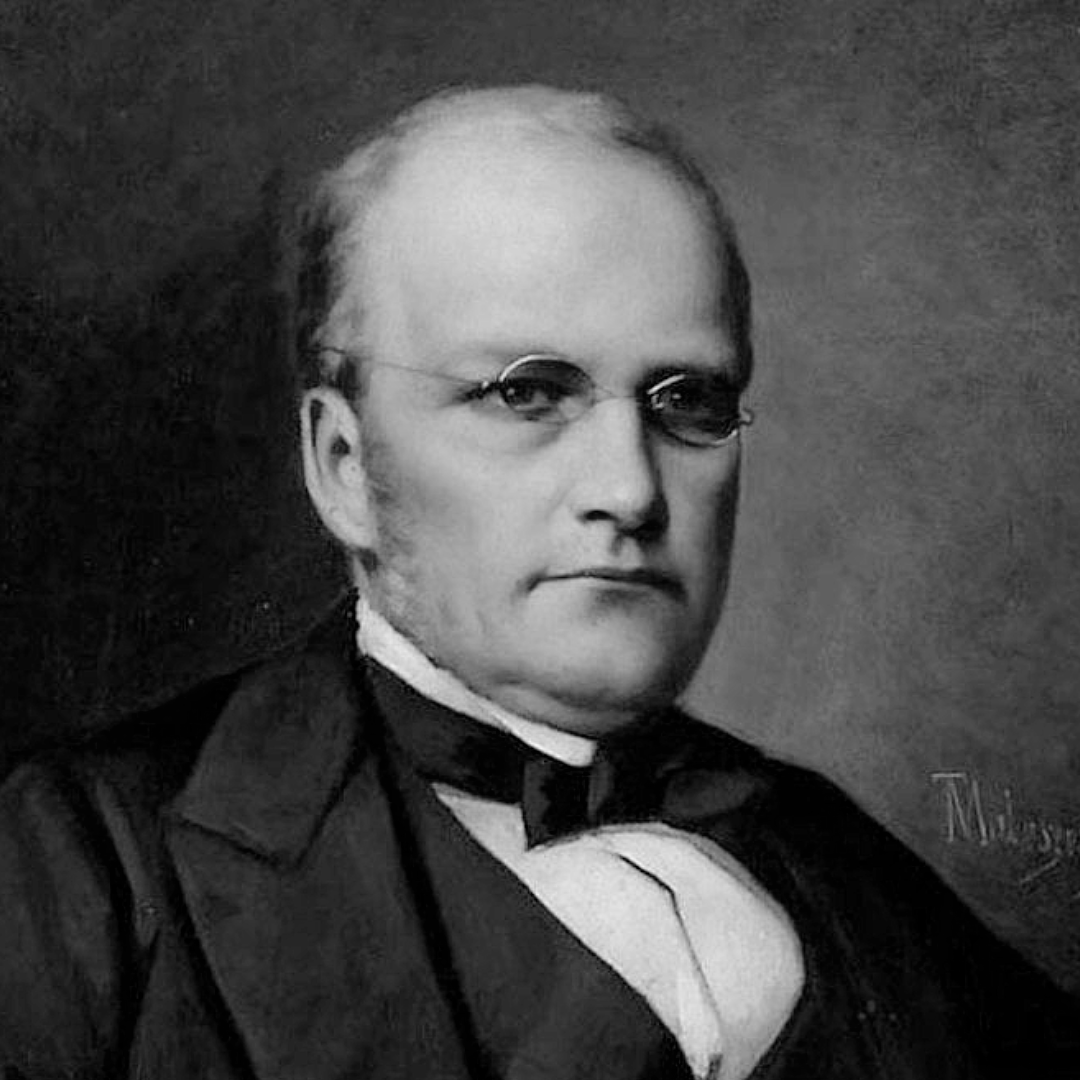
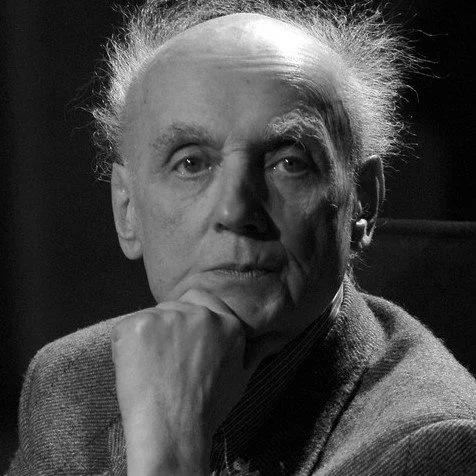
Ignacy Jan Paderewski
Ignacy Jan Paderewski (1860–1941) was a titan of Polish culture who uniquely blended the roles of a world-renowned virtuoso pianist, an influential composer, and a statesman who played a pivotal role in restoring Poland's independence. Born in Kuryłówka in the Podolia region (present-day Ukraine), he studied at the Warsaw Music Institute before traveling to Berlin to study composition with Friedrich Kiel and Heinrich Urban, and later to Vienna for piano studies with Teodor Leszetycki. His international career was launched with a spectacular debut at the Salle Erard in Paris in 1888, after which he became one of the most idolized figures of the late Romantic era, often referred to as the "King of Pianists" for his legendary interpretations of Chopin and Liszt.
As a composer, Paderewski left a diverse legacy including the opera Manru—the only Polish opera ever performed at the Metropolitan Opera—the monumental Symphony in B minor "Polonia", and ubiquitous piano miniatures such as the Minuet in G major. Beyond the concert hall, he was a tireless advocate for his homeland; during World War I, he engaged in extensive diplomatic and charitable work, eventually presenting a memorandum for Polish independence to U.S. President Woodrow Wilson. In 1919, he became the first Prime Minister and Minister of Foreign Affairs of the reborn Polish state, famously signing the Treaty of Versailles. He died in New York City in 1941 while once again rallying international support for Poland during the Second World War. Although initially buried at Arlington National Cemetery, his remains were returned to Poland in 1992 and interred in St. John's Archcathedral in Warsaw.
Overture in E-flat major
The Overture in E-flat major represents the "orchestral genesis" of Ignacy Jan Paderewski. Written in 1884 during his residency in Berlin, the work was a product of rigorous academic training under Heinrich Urban, who encouraged the young composer to master the sonata-allegro form within a full orchestral context. Though modern summaries occasionally misidentify the key as E-flat minor, the definitive PWM critical edition confirms its identity as a heroic and triumphant major-key work.
The history of the Overture is as dramatic as its music; the manuscripts were hidden or forgotten for nearly a hundred years until they were identified in a 1986 archival search. Its modern premiere took place on June 7, 1991, in Katowice, followed by a "full version" premiere in Kraków in 1996.
Musically, the Overture is a study in "Classical-Romantic" synthesis. It features robust brass fanfares—described by some critics as cor de signal gestures—and a mastery of thematic transformation that would later characterize his Symphony in B minor "Polonia". Edited for PWM by Wojciech Maria Marchwica, the score demonstrates Paderewski’s early ability to balance "civilized life in Europe" with the "dreams and exuberance of youth," making it an ideal curtain-raiser for a program of Polish Romantic masterpieces.
Zygmunt Noskowski
Born in Warsaw on May 2, 1846, Zygmunt Noskowski is widely regarded as the "architect of Polish symphonism" and the crucial link between the era of Stanisław Moniuszko and the modernist "Young Poland" generation. He began his education at the Warsaw Music Institute under Moniuszko, but his musical voice was truly forged in Berlin (1872–1875), where he studied with Friedrich Kiel. There, he mastered the rigorous German symphonic tradition—counterpoint, form, and orchestration—skills that were largely undeveloped in the Polish musical education system of the time.
After a brief period conducting in Constance, Switzerland, Noskowski returned to Warsaw in 1881 to find a city suffering from a "symphonic vacuum." As director of the Warsaw Music Society and later a conductor for the newly founded Warsaw Philharmonic, he dedicated his life to building a professional orchestral culture from the ground up. His own compositions, including the famous symphonic poem The Steppe (Step) and the Variations sur un thème original, were written to provide this new ecosystem with high-quality, native repertoire that balanced Polish lyricism with Western structural logic.
Noskowski’s most enduring legacy, however, was his role as a pedagogue. As a professor at the Warsaw Institute of Music for over twenty years, he taught virtually every major Polish composer of the next generation, including Karol Szymanowski, Mieczysław Karłowicz, and Ludomir Różycki. While his students would eventually rebel against his conservative Romantic style, it was Noskowski’s strict technical training that gave them the tools to place Polish music back on the international map. He died in Warsaw on July 23, 1909.
Variations sur un thème original
In the early 1880s, the musical heart of Warsaw was beating faintly. The city, still reeling from the cultural strangulation that followed the failed January Uprising of 1863, had become a "symphonic vacuum." While the opera house thrived as a social hub and private salons kept the piano music of Chopin alive, there was no permanent symphony orchestra to speak of. The Tsarist authorities viewed large gatherings and nationalistic cultural expressions with deep suspicion, leaving the city without a voice for the grand orchestral forms that were sweeping the rest of Europe.
Into this silence stepped Zygmunt Noskowski. In January 1881, the thirty-four-year-old composer returned to his native Warsaw after years of rigorous training in Berlin and a conducting post in Switzerland. He did not return merely to compose; he returned to rebuild. He found a musical landscape populated by amateurs and dominated by transient touring ensembles. Taking the helm of the Warsaw Music Society (WTM), Noskowski set himself a task that seemed almost impossible: to forge a professional orchestral culture from the ground up.
It was in this atmosphere of reconstruction that he composed his Variations sur un thème original around 1883. The piece was not just an artistic statement; it was a pragmatic tool born of necessity. Noskowski needed repertoire that could serve two masters. First, it had to be a teaching vessel for his inexperienced musicians, capable of disciplining them in the strictures of ensemble playing, balance, and the German symphonic tradition he had mastered under Friedrich Kiel. Second, it needed to speak to the Polish public, offering them a taste of national dignity without alerting the Russian censors.
Noskowski’s solution was brilliant in its subtlety. He composed an "original theme" in E minor that sounded for all the world like an ancient, weary folk song. He cast it in the rhythm of a Polonaise—the dance of the Polish nobility and a symbol of the lost Commonwealth—but stripped it of its usual military pomp, rendering it instead with a lyrical, nostalgic intimacy. To the censors, it was just a melody; to the Polish audience, it was a quiet, stubborn reminder of their identity.
As the Warsaw Music Society orchestra rehearsed the work, they were receiving a masterclass in the "Berlin style." The variations forced the woodwinds to navigate complex, weaving counterpoint and the strings to execute shivering, rapid-fire tremolos that evoked the biting winds of a Polish winter. This was music that demanded professional precision, pulling the musicians out of the salon and into the concert hall.
When the piece was premiered, likely at one of the Society's Wednesday concerts, it stood as a "calling card" for a new era of Polish music. It proved that a local composer could marry the emotional warmth of Moniuszko with the intellectual architecture of Brahms. While Noskowski would eventually be overshadowed by the radical modernism of his own students, such as Karol Szymanowski, it was this specific work and the relentless organizational effort behind it that laid the foundation for the Warsaw Philharmonic’s eventual founding in 1901. The Variations in E minor remain a sonic document of that pivotal moment—a symphony for a city that didn't yet have an orchestra, written by the man determined to give it one.
Władysław Żeleński
Władysław Żeleński (1837–1921) occupies a pivotal position in the history of Polish culture as the leading representative of the neo-romantic era and a foundational figure in the nation's musical education system. Born into a landowning family in Grodkowice, his early life was marked by the tragedy of the 1846 Galician uprising, yet he pursued a rigorous path of intellectual and artistic development that took him from Kraków to Prague—where he earned a doctorate in philosophy—and finally to Paris for advanced composition studies with Napoléon Henri Reber and Bertold Damcke. This cosmopolitan training endowed his music with a technical solidity and formal discipline often compared to Johannes Brahms, distinguishing his output from the earlier, more intuitive romanticism of Stanisław Moniuszko.
Upon his return to partitioned Poland, Żeleński assumed the mantle of a cultural statesman, embracing the positivist ideal of "organic work" to rebuild the nation's artistic infrastructure. He succeeded Moniuszko as professor of harmony and counterpoint at the Warsaw Institute of Music in 1872 before returning to Kraków to establish the Conservatory of the Music Society in 1887, an institution he directed until his death. As a pedagogue, he shaped the next generation of Polish composers, including Zygmunt Stojowski and Henryk Opieński, while his tenure as a conductor and organizer revitalized the concert life of both capitals.
As a composer, Żeleński sought to marry the European symphonic tradition with a distinct national spirit. His oeuvre encompasses the celebrated overture W Tatrach (In the Tatra Mountains), which vividly captures the highland landscape, and significant operatic works such as Goplana and Janek, which explore Polish literary and folkloric themes. Although the modernist "Young Poland" movement later viewed his style as conservative, contemporary scholarship and the "Heritage of Polish Music" initiative by Polskie Wydawnictwo Muzyczne have re-evaluated his legacy, revealing a composer of profound lyricism and dramatic instinct who successfully bridged the gap between the insurrectionary romanticism of the mid-19th century and the avant-garde of the 20th.
Funeral Tones
Władysław Żeleński’s Dźwięki Żałobne (Funeral Tones), Op. 36, stands as a poignant solitary monument to a lost chapter in Polish symphonic history. Composed around 1871, this work was originally the Andante movement of the composer’s Symphony No. 1, an ambitious large-scale work that premiered in Warsaw on April 19, 1872, under Żeleński’s own baton. While the manuscript for the complete symphony has vanished—a casualty of the turbulent history of Polish archives—this single movement survived thanks to its separate 19th-century publication under the German title Trauerklänge. Today, through the extensive editorial efforts of Polskie Wydawnictwo Muzyczne (PWM) and the "Heritage of Polish Music" project, the piece has been scientifically reconstructed and restored to the concert repertoire, serving as a vital link between the eras of Stanisław Moniuszko and the "Young Poland" movement.
Musically, the piece embodies the noble, restrained melancholy characteristic of Żeleński’s mature neo-romantic style, which critics often compare to the dense, dark textures of Johannes Brahms. Far from a theatrical display of grief, the score calls for a classical orchestral apparatus—lacking tuba or heavy percussion—and relies instead on the sombre, cohesive blending of four horns, three trombones, and strings to generate its emotional weight. The "funeral" character is achieved through rich harmonic modulations and a broad, lyrical narrative that unfolds over approximately eight to nine minutes. Now available as a critical edition in the PWM Hire Library, the Andante stands not merely as a fragment, but as a complete, deeply expressive elegy that testifies to the high symphonic culture Żeleński sought to establish in partition-era Poland.
Stanisław Moniuszko
Stanisław Moniuszko (1819–1872) is revered as the father of Polish national opera, a composer who gave a distinct musical voice to a nation erased from the political map of nineteenth-century Europe. Born into a noble family in Ubiel near Minsk, he completed his musical education in Berlin before settling in Vilnius, where he spent nearly two decades working as an organist and teacher while crafting the early versions of his dramatic works. His career reached its zenith in 1858 with the triumphant Warsaw premiere of the four-act Halka, a success that secured his appointment as the conductor of the Polish Opera at the Teatr Wielki and established him as the leading figure of Poland's musical romanticism.
Moniuszko’s vast output was driven by a patriotic mission to sustain the Polish spirit during the era of partitions. Beyond his stage masterpieces, such as The Haunted Manor (Straszny dwór) and The Countess (Hrabina), he composed over three hundred songs collected in the Śpiewniki domowe (Songbooks for Home Use), which introduced the finest Polish poetry into domestic life. His musical language is defined by a lyrical melodic richness and a rhythmic vitality rooted in national dances—the polonaise, mazur, and krakowiak—masterfully stylized to bridge the gap between the village and the manor house. Today, his legacy is stewarded by Polskie Wydawnictwo Muzyczne, whose monumental editions ensure that his vision remains a vital part of the international repertoire.
Halka: dances of mountaneers and Mazur
Stanisław Moniuszko’s Halka stands as the cornerstone of Polish national opera, yet the vibrant ballet music that audiences cherish today was not part of its original conception. When Moniuszko prepared the work for its decisive Warsaw premiere in 1858, he expanded the modest two-act drama into a four-act spectacle, strategically adding extensive dance sequences to rival the grandeur of French grand opera then in vogue. These additions, specifically the Mazur from Act I and the Tańce Góralskie (Highlander Dances) from Act III, serve as powerful dramatic foils, musically encoding the class conflict at the heart of the opera between the landed gentry and the mountain peasantry.
The Mazur opens the opera’s festive world, serving as a sonic portrait of the Polish nobility. In the concert hall, this piece is most often heard in the monumental version edited by Grzegorz Fitelberg for Polskie Wydawnictwo Muzyczne (PWM). Fitelberg’s mid-20th-century orchestration significantly thickened Moniuszko’s original texture, employing a full battery of percussion and doubled winds to achieve a symphonic weight and martial brilliance that projects the power and splendor of the szlachta. It acts as a stylized polonaise-mazurka, driving forward with a rhythmic arrogance that contrasts sharply with the tragedy unfolding for the title character.
In stark contrast, the Tańce Góralskie transport the listener to the rugged landscape of the Tatra Mountains. Edited for PWM by Kazimierz Sikorski, this suite is a masterclass in romantic stylization rather than strict ethnomusicology. Moniuszko evokes the spirit of the highlanders through the use of the Lydian mode, drone basses imitating bagpipes (dudy), and an obsessive, ostinato rhythmic drive. The orchestration is distinctively rustic, notably calling for a third oboe (typically an English Horn) to mimic the nasal cry of folk shawms, creating a raw, feral energy that stands in opposition to the refined ballroom atmosphere of the Mazur.
For over seventy years, these PWM editions have defined the sound of Moniuszko’s music for orchestras worldwide, transforming theatrical interludes into autonomous concert masterpieces. While recent scholarship and facsimile editions from the "Moniuszko 200" jubilee have begun to reveal the lighter, more transparent textures of the composer’s 1858 autograph, the Fitelberg and Sikorski versions remain the enduring standard of the symphonic repertoire. Together, these dances encapsulate the dual soul of the Polish nation during the partition era—the proud heritage of the manor house and the indomitable spirit of the mountains.
Wojciech Kilar
Wojciech Kilar (1932–2013) stands as one of the most transformative figures in twentieth-century Polish music, a composer who transitioned from the radical vanguard of the "Polish School" to a style of profound, meditative simplicity. Born in Lviv and educated in Katowice under Bolesław Szabelski, Kilar later polished his technique in Paris with the legendary Nadia Boulanger, whose influence reinforced the clarity of structure and neoclassic ideals that underpinned even his most iconoclastic early works. During the 1960s, he emerged as a leader of the sonoristic movement, a period defined by an eruption of sound inventiveness and "savage" aesthetics that challenged traditional concepts of harmony and form.
In the early 1970s, Kilar rejected the theoretical complexities of the avant-garde in favor of a "flesh and blood" musical realism that he famously termed his "journey toward simplicity." This aesthetic rebirth led to the creation of his celebrated Tatra Mountain cycle and a deepening engagement with sacred music, where he sought to find the "philosopher’s stone" within a solitary sound or repetitive concord. Beyond the concert hall, Kilar achieved global renown as a prolific film composer, scoring over 130 titles including Francis Ford Coppola’s Dracula and Roman Polański’s The Pianist.Describing his own nature as "happy-sad, like a minor chord with an added minor seventh," Kilar remained a man of deep humility and religious conviction, viewing his mature compositions as elemental prayers that captured the spiritual essence of the Polish landscape.
orawa
Wojciech Kilar’s Orawa (1986) serves as the vibrant final chapter of his "Tatra Mountain Works" cycle, a series of compositions that reimagined the rugged landscape and folklore of the Polish Highlands after the composer’s earlier years in the sonoristic avant-garde. This symphonic poem for chamber string orchestra represents the definitive synthesis of Kilar’s mature style—a "new simplicity" characterized by rhythmic motorics, minimalist structures, and a profound engagement with the spirit of the Górale (highlanders). Conceived as a "magnified folk band," the work utilizes a string ensemble to simulate the visceral energy of a traditional mountain kapela, creating a dense, vibrant texture that preserves the spontaneity of folk performance through sophisticated orchestral means.
The music is structured as a continuous nine-minute movement built upon persistent ostinatos and a relentless, incremental acceleration that Kilar intended to "grab the listener by the head" until the very end. Its title refers to the Orawa region straddling the border of Poland and Slovakia, and the piece evokes the spiritual essence of that landscape through folk-like open harmonies and driving rhythmic patterns. Kilar famously claimed that Orawa was the only work in his catalog in which he "wouldn’t change a single note," describing it as the perfect fulfillment of his artistic goals. The work builds with ferocious persistence toward a riotous conclusion marked by a boisterous collective shout from the ensemble—a stylistic trait borrowed from highlander dance culture that signifies the explosive end of a folk celebration. Published by Polskie Wydawnictwo Muzyczne (PWM Edition) under catalog number 8912, Orawa has become an unquestionable icon of Polish music, frequently performed internationally both in its original form and in various arrangements for string quartet, saxophones, and accordions.
In this performance, Nie | Romantyczni performs the piece on gut strings, a choice that adds a distinctive character and raw acoustic quality to the work. This historical approach to the string texture introduces a unique sound palette that ranges from delicate resonance to a gritty intensity that borders on noise—a sonic profile that uniquely complements Kilar’s vision of music as a "flesh and blood" elemental force.
nie | romantyczni
A New Voice in Historical Performance Nie | Romantyczni is a pioneering orchestra based in Gdańsk, standing as Poland's first ensemble exclusively dedicated to performing late Romantic repertoire on historical instruments. Built on a foundation of historical awareness and deep artistic curiosity, the orchestra was established to forge a profound, authentic connection with modern audiences by exploring the authentic, unpolished textures of the 19th century.
The Philosophy of True Sound At the core of the orchestra's artistic vision is a commitment to challenging the highly refined conventions of modern symphonic playing. Rather than conforming to contemporary expectations that classical music must always sound effortlessly "beautiful," the ensemble embraces the grit and disruptive emotional power inherent in Romantic-era compositions. By utilizing period instruments and historically informed performance practices, the musicians strip away modern varnish to reveal the original colors of the era. Their goal is not merely to please the ear, but to genuinely shake and stir the soul.
Reviving Cultural Heritage A central pillar of the orchestra's identity is the revival and reinterpretation of 19th-century musical heritage. The ensemble passionately sheds fresh light on forgotten masterpieces and offers dynamic historical perspectives on the era's great creators. By focusing heavily on the Polish symphonic tradition alongside broader European works, the orchestra aims to elevate historically significant compositions and present them in their true, intended context.
Building a Musical Home Designed as a sustainable cultural project rather than a vehicle for isolated events, the orchestra takes a holistic approach to the musical experience. The ensemble is dedicated to uncompromising artistic excellence while simultaneously demystifying the creative process through educational initiatives, such as open rehearsals and historical score research. By fostering a close-knit community of supporters and prioritizing long-term continuity through creative laboratories and professional recordings, Nie | Romantyczni seeks to build a lasting, vibrant home for Romantic music in Poland.
Polskie Wydawnictwo Muzyczne (PWM) is a state cultural institution and the largest music publisher in Poland. For over 75 years, it has promoted Polish music worldwide, managing a catalogue that spans from the Romantics to the modern 'Polish School of Composition.' As the exclusive representative of major global catalogues and the home of the 'Polish Music Library, PWM provides the essential orchestral materials that make our concert activities possible.
As a sponsor of our 2026 debut concert tour, PWM supports Nie | Romantyczni in our mission to return to the source sound.